Introduction to Exosomes and Extracellular Vesicles
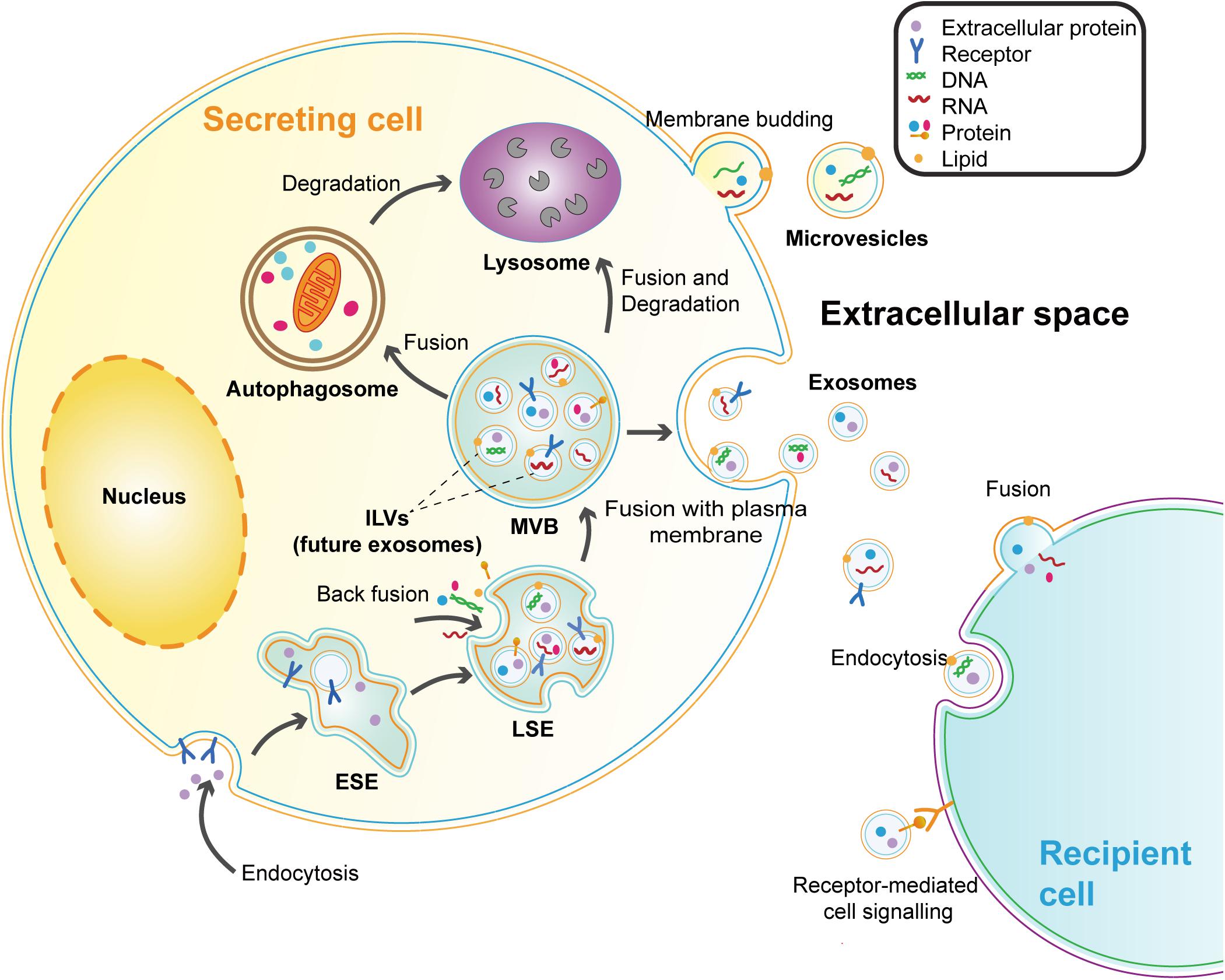
Exosomes are small extracellular vesicles (typically 30–150 nm in diameter) released by virtually all cell types and play a critical role in intercellular communication. They transport proteins, lipids, and nucleic acids between cells, influencing a wide range of biological processes. Authoritative educational overviews of exosome biology and extracellular vesicles (EVs) are available from https://www.ncbi.nlm.nih.gov/books/NBK557655/ and https://www.genome.gov/genetics-glossary/Extracellular-Vesicles.
Exosome Assay Kits provide standardized, reproducible laboratory tools for detecting, quantifying, and characterizing exosomes and other EVs in research samples. These kits are designed exclusively for research use and support fundamental investigations into cell communication, molecular signaling, and vesicle biology.

Biological Background of Exosomes
Exosome Biogenesis and Secretion
Exosomes originate from the endosomal pathway and are released upon fusion of multivesicular bodies with the plasma membrane. This process is well described in academic literature available at https://www.ncbi.nlm.nih.gov/pmc/articles/PMC5452224/ and https://www.ncbi.nlm.nih.gov/books/NBK556084/.
Exosome Assay Kits enable researchers to:
-
Quantify exosome release under different conditions
-
Study vesicle secretion dynamics
-
Compare EV production across cell types
-
Analyze changes in exosome abundance following experimental treatments
Molecular Cargo of Exosomes
Exosomes carry biologically active cargo including proteins, lipids, mRNA, and non-coding RNA. These cargo molecules can modulate gene expression and signaling pathways in recipient cells. Educational resources on exosome cargo composition can be found at https://www.ncbi.nlm.nih.gov/pmc/articles/PMC6124001/ and https://www.genome.gov/about-genomics/fact-sheets/Non-Coding-RNA-Fact-Sheet.
Assay kits support:
-
Protein marker detection (e.g., tetraspanins)
-
Quantification of total exosome-associated proteins
-
Comparative cargo analysis across experimental groups
-
Functional studies of vesicle-mediated signaling
Exosome Surface Markers and Identification
Exosomes are commonly identified using conserved surface markers such as CD9, CD63, and CD81. Marker-based identification strategies are described in guidelines and educational materials at https://www.ncbi.nlm.nih.gov/pmc/articles/PMC7340486/ and https://www.ncbi.nlm.nih.gov/books/NBK557655/.
Exosome Assay Kits allow laboratories to:
-
Detect canonical exosome markers
-
Confirm vesicle identity
-
Compare EV populations across samples
-
Standardize exosome characterization workflows
Laboratory Applications of Exosome Assay Kits

Cancer and Cell Biology Research
Exosomes are widely studied in cancer research as mediators of tumor–microenvironment communication. Educational research discussions are available at https://www.cancer.gov/research/key-initiatives/ras/news-events/exosomes and https://www.ncbi.nlm.nih.gov/pmc/articles/PMC5525181/.
Exosome Assay Kits enable:
-
Quantification of tumor-derived exosomes
-
Analysis of vesicle-mediated signaling pathways
-
Comparison of exosome release under stress conditions
Neuroscience and Neurobiology
Exosomes contribute to neuronal communication and synaptic regulation. Academic discussions of exosome roles in the nervous system can be found at https://www.ncbi.nlm.nih.gov/pmc/articles/PMC5579396/ and https://www.ninds.nih.gov/health-information.
Assay kits support:
-
Analysis of neuronal exosome secretion
-
Study of vesicle-mediated signaling in neural cells
-
Investigation of exosome-associated molecular cargo
Stem Cell and Regenerative Biology
Stem cells actively secrete exosomes that influence differentiation and tissue remodeling. Educational overviews from https://stemcells.nih.gov/info/scireport/pages/chapter-5.aspx and https://www.ncbi.nlm.nih.gov/books/NBK26842/ describe how exosomes contribute to stem cell biology.
Exosome Assay Kits are used to:
-
Characterize stem cell-derived exosomes
-
Compare vesicle output during differentiation
-
Study paracrine signaling mechanisms
Immunology and Inflammation Research
Exosomes play a role in immune cell communication and antigen presentation. Academic and government-supported resources include https://www.ncbi.nlm.nih.gov/pmc/articles/PMC5611913/ and https://www.niaid.nih.gov/research.
Assay kits enable:
-
Analysis of immune cell-derived exosomes
-
Study of vesicle-mediated immune signaling
-
Quantification of exosomes in inflammatory models
Drug Discovery and Delivery Research
Exosomes are increasingly explored as natural delivery vehicles in experimental systems. Educational discussions are available at https://www.ncbi.nlm.nih.gov/pmc/articles/PMC7074079/ and https://www.ncbi.nlm.nih.gov/pmc/articles/PMC7340486/.
Exosome Assay Kits support:
-
Evaluation of vesicle loading efficiency
-
Comparison of exosome yield across conditions
-
Standardized analysis of EV-based delivery models
Advantages of Exosome Assay Kits in Research Laboratories
From a practical laboratory perspective, Exosome Assay Kits offer:
-
Optimized and validated reagents
-
High sensitivity for low-abundance vesicles
-
Compatibility with cell culture supernatants and biofluids
-
Reproducible workflows aligned with published EV guidelines
These benefits are consistent with best laboratory practices recommended by research training initiatives such as https://oir.nih.gov/sourcebook/ethical-conduct/responsible-conduct-research-training.
Integration with Advanced and Multi-Omics Workflows
Exosome Assay Kits are frequently integrated with proteomics, transcriptomics, and imaging-based analyses to provide deeper insights into vesicle composition and function. Government-funded research initiatives such as https://www.genome.gov/Funded-Programs-Projects and https://www.ncbi.nlm.nih.gov/guide/cellbiology/ emphasize the importance of EV research in systems biology.
Conclusion
Exosome Assay Kits are essential tools for advancing extracellular vesicle research. By enabling reproducible detection, quantification, and characterization of exosomes, these kits help laboratories translate complex cell-to-cell communication mechanisms into reliable experimental data.
Designed strictly for research use, Exosome Assay Kits support discovery-driven science across cancer biology, neuroscience, immunology, stem cell research, and molecular biology—fully aligned with the educational standards, methodologies, and best practices established by leading .edu and .gov research institutions worldwide.